
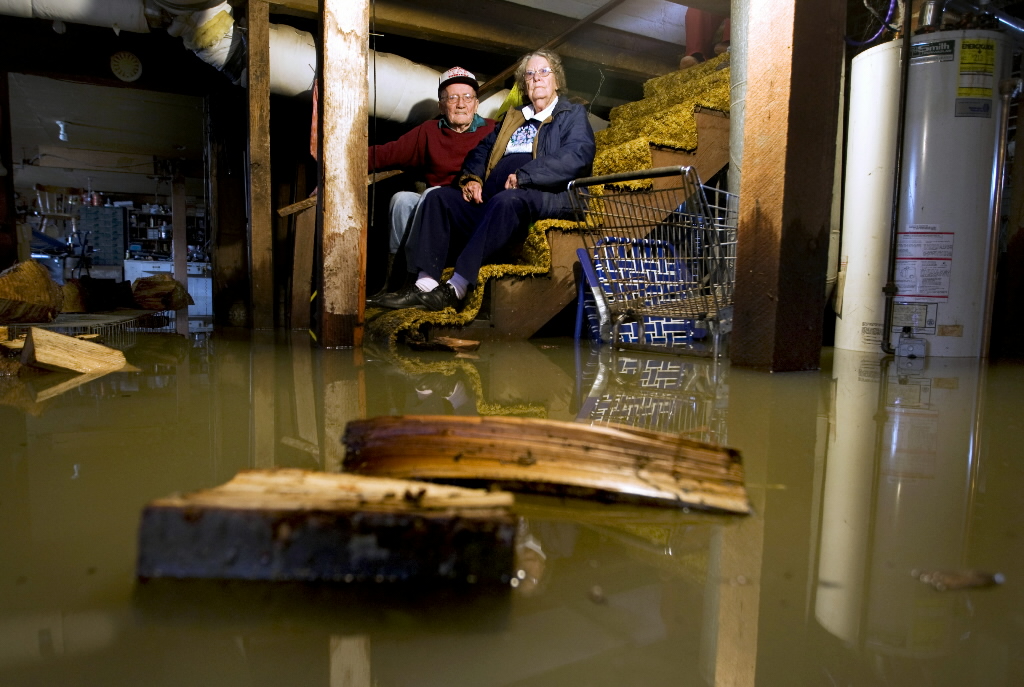
The first step for getting rid of mold is to air out your house.
2 If you have power, turn on your air conditioner, a dehumidifier, and/or every fan you own. Keep your windows closed if you have a dehumidifier and an air conditioner to help the air circulate inside and get rid of excess moisture. Keep your windows open if you have only fans, and face the exhaust toward an open window.
If you don’t have power but you own a portable generator, use it so that you can follow the strategy above. Just remember that generators emit deadly carbon monoxide; to avert carbon monoxide poisoning, never run a generator indoors.
No power at all? If weather permits, open all your windows and doors to create airflow.
3. Monitor the Moisture
While you’re airing out your home, use a humidity meter, around $15 at hardware stores, to keep tabs on the moisture level. Aim for between 30 and 50 percent humidity to inhibit mold growth, the EPA advises [PDF].
Floors, walls, and furniture may be dry to the touch and still harbor mold and bacterial growth. A moisture meter, $50 at hardware stores, is another good tool to have, so you can detect dampness you can’t see.
4. Remove Debris
Before you get rid of contaminated debris, be sure to put on your respirator and other protective gear.
If you have flood insurance, call your insurance company about the documentation you need to back up your claim. You may need to save pieces of carpet, flooring, and walls, and take photos of the extent of the damage. The Insurance Information Institute says some insurers may want to view your property remotely via video chat or even use drone footage to assess damage to your entire neighborhood.
If any household items, such as pieces of furniture or carpeting, have been damaged and you can’t clean and dry them within 24 to 48 hours of your house being flooded, discard them, the Centers for Disease Control and Prevention recommends. Chances are these items already harbor mold and can’t be saved. If there’s any item of value that has to be discarded, take a photo of it for your insurance claim.
Ask your town’s sanitation department about how to dispose of household items from your cleanup.
5. Remove Damaged Drywall
If the drywall in your home has more than 10 square feet total of water damage, the EPA recommends hiring a contractor with experience handling water damage to remove it. Any area smaller than that, however, you can deal with yourself. You’ll want to cut the drywall 15 to 24 inches above the visible water line.
“Take a utility knife, score the drywall, then punch it in,” Bishop says. Check with your local sanitation department to see whether you need to take the drywall to a dump yourself, or if you can just pile it up on your curb for trash pickup.
Then, if the insulation behind the drywall is damp, you’ll need to remove that, too. Nonporous materials, such as metal and glass, can simply be cleaned thoroughly with water and detergent and sanitized with a bleach and water solution. The CDC recommends 1 cup of bleach to 1 gallon of water to remove mold on hard surfaces.
Don’t seal any walls up with new insulation and drywall until everything is completely dry.
6. Remove Flooring
Even if they appear dry, ceramic tile, sheet vinyl, laminate, and solid wood floors should be removed because moisture and silt collects underneath them—and cause bacteria or mold to grow.
Once you discard these, ensure that everything is clean and dry before installing new flooring. Maintain your home’s humidity at 30 to 50 percent, and use a moisture meter to check that subflooring is at or below 16 percent moisture content before installing new flooring (for wood floors, manufacturers advise that the subfloor’s moisture content should be 13 percent or less). Be patient—it might take a few weeks for your flooring to return to reasonable moisture content, Bishop says.
If you’re unsure when you can reinstall flooring, the EPA recommends that you consult with a contractor or home inspector who has experience with flooding (see above).
7