Introduction
Water pouring across a floor or through a ceiling feels scary and confusing. In those first minutes, it is hard to think clearly about what to do first. You need to stop the water, turn off electricity in wet rooms, and avoid tools like a standard household vacuum that can shock you.
According to FEMA, just one inch of water in a home can cause up to $25,000 in damage. That is why the order of your steps matters. You shut off the main water shut off valve, cut power to affected rooms, document the damage, start drying to prevent mold, and call a qualified restoration company such as Scavello Restoration if the damage is more than minor.
The Insurance Information Institute reports that water damage and freezing account for nearly 29 percent of all homeowners insurance claims, making it one of the most common and costly disasters American homeowners face. This guide walks through each step in clear language so you can act fast and stay safe. Next comes the most urgent part: how to stop the water and cut the power correctly.
Key Takeaways
When water damage hits a home, a clear checklist helps you think through the stress. Keep these points in mind before you touch a mop or box of towels.
Shut off the main water supply valve as soon as you find flowing water. Every minute that water keeps moving into walls and floors adds cost. Find the valve now, before an emergency, so you can close it without guesswork.
Cut electrical power to all wet or flooded rooms at the breaker panel. Never walk through standing water if the power might still be on. If the panel is in a flooded area, stay back and call the utility or fire department.
Never use a household vacuum on standing water on floors or carpets. These machines are not sealed for water, so they can shock you and ruin the motor. Use only wet dry vacuums listed for liquid use, and only after circuits are off.
Document all damage with photos, video, and a written list before any cleanup begins. Insurance adjusters and public adjusters depend on that record. Clear files make it easier for a company such as Scavello Restoration to support your claim.
Call a certified water damage professional within the first 24 hours to prevent mold. Fast structural drying with commercial fans and dehumidifiers keeps spores from growing. According to the EPA, mold can begin to grow on wet materials within 24 to 48 hours.
Stop the Water and Cut the Power Immediately
Stopping the water and cutting the power are the first safety steps after any leak or flood. These actions protect both people and the structure from bigger losses.
Start with the main water shut off valve. In most southeastern Pennsylvania homes, including properties in Collegeville, Pottstown, and Phoenixville, this valve sits where the main line enters the house. Look along the front basement wall, near the water heater, in a utility closet, or under the kitchen sink in slab homes. Turning this single valve stops water to toilets, sinks, and appliances in one move.
Studies by the Water Research Foundation estimate that household plumbing leaks waste more than 1 trillion gallons of water annually across the United States, and a burst pipe can discharge up to 8 gallons per minute if left unchecked.
You may see a lever handle or a round wheel:
A lever handle is a ball valve; turn it a quarter turn so it sits across the pipe.
A round wheel is a gate valve; twist it clockwise until it will not move further.
After closing the valve, open a cold water faucet. A brief trickle is normal as pressure drops, but a steady stream means the valve did not close fully and you should call a plumber.
If you cannot find or move the indoor valve, you might shut water at the street. Many Montgomery County homes have a curb box near the sidewalk marked with the word water. A T‑shaped meter key, sold at hardware stores like Home Depot, lets you turn that valve. When in doubt, ask your local water authority for guidance before an emergency happens.
Next, handle the electricity. Water and live power can turn a basement or bathroom into a shock hazard, and understanding Electrical Injuries – StatPearls helps clarify why immediate power shutoff is critical. Go to the electrical panel and shut off breakers that serve any wet room. If you are unsure which breakers to pick, switch off the main breaker to cut power to the whole building. Never enter standing water until you know the power to that area is off.
According to the Insurance Information Institute, water damage and freezing cause nearly one in five homeowners insurance claims, and many involve electrical concerns. The average water damage claim costs homeowners approximately $11,000 to $12,000, making prompt shutoff of both water and electricity one of the highest-value actions you can take in the first minutes of a flood event.
If the panel is in a soaked basement or any area with pooled water, stay away from it. From outside the wet area, call your utility company, fire department, or a licensed electrician. Property managers in multi‑unit buildings around Greater Philadelphia should treat shared walls and ceilings the same way, since one leak can carry current through several units.
What to Do If the Leak Is a Roof, Not a Pipe
When a roof leak sends water through a ceiling, you cannot shut off the clouds, but you can control where the water goes. Roof leaks are common during heavy rain around Royersford and Skippack, and fast action can protect floors and contents. According to the National Roofing Contractors Association, roof leaks are among the top three causes of structural water damage in residential buildings, and delayed response increases repair costs by an average of 35 percent.
Place buckets, trash cans, or storage bins under every active drip right away.
Move rugs, furniture, and electronics out of the wet area so water does not pool on wood or fabrics, including books and paper materials whose damage is addressed in Drenched Pages: A Primer on water-saturated materials.
Lay plastic sheeting, baking pans, or thick towels on the floor to catch splashes and keep water from spreading across hardwood or laminate.
If it is safe to access the roof, and the storm has eased, a tarp carefully placed over the damaged section can slow the leak. Have another person steady the ladder, and avoid walking on steep or damaged surfaces. Inside the home, turn off power to the affected room in the breaker panel, since wet ceilings and light fixtures can hide live wires.
Once the rain stops and the area is safe, contact a roofer for repair and a restoration company such as Scavello Restoration to inspect insulation and framing. Wet ceiling materials in older homes near King of Prussia or Paoli often hide saturated insulation that needs expert drying or removal.
Never Use a Standard Household Vacuum and What to Do Instead
Using a standard household vacuum on standing water is unsafe and ineffective. These machines are not built for liquids, and they can shock you or start a fire. Consumer safety researchers note that improper use of household vacuums near water is linked to hundreds of electrocution-related injuries reported to U.S. emergency rooms each year.
A regular upright or canister vacuum allows water into the motor and electrical parts, a risk supported by Neural Network Techniques for detecting and understanding domestic water intrusion scenarios. That can short out wiring, trip breakers, or send current through the handle into your body. Even if no one is hurt, the vacuum will likely fail, and you will still have soaked carpets and baseboards. For the same reason, never plug fans or space heaters into outlets in a wet room until an electrician or qualified restorer has checked them.
Safer options exist for small leaks. A true wet dry vacuum that lists liquid use on its label can handle shallow puddles on tile or concrete. Keep the cord and plug away from water, plug into a dry outlet in another room, and empty the tank often so it does not overflow. For a few gallons of water from a minor washing machine overflow, this approach can help.
For anything larger, such as soaked carpet or a flooded basement in Limerick, professional water extraction is the smart move. Scavello Restoration uses truck‑mounted extractors, portable pumps, and weighted tools that pull water from padding and subfloors. According to the IICRC, fast and thorough extraction is the single most important step in drying a water damaged structure. Professional-grade truck-mounted extractors can remove water at a rate of up to 25 gallons per minute, compared to roughly 3 to 5 gallons per minute for a typical consumer wet dry vacuum.
Here is a simple comparison to guide your choice.
| Method | Safe For Water | Best Use Case | Main Limitation |
|---|---|---|---|
| Standard household vacuum | No | None | Shock risk and ruined equipment |
| Wet dry vacuum | Yes | Small, shallow puddles on hard floors | Slow, tank fills fast |
| Professional extraction | Yes | Large areas, carpets, walls, basements | Needs a trained company on the scene |
“Professional grade extraction equipment removes water far faster than consumer machines, which directly affects drying time and what can be saved.”
— Scavello Restoration, IICRC Certified Water Damage Team
When you see several rooms affected, or water standing higher than your shoe sole, call Scavello Restoration instead of fighting it with home equipment.
Document Everything Before You Touch Anything
Documenting water damage before cleanup protects your insurance claim and guides repair work. Photos, video, and written notes show what really happened inside the home.
Start with wide shots of every affected room. Use a smartphone to walk slowly and pan from floor to ceiling, capturing wet carpets, baseboards, and walls. Then take close‑ups of buckled flooring, stained ceilings, swollen doors, and damaged furniture. If a pipe burst under a sink or behind a washing machine, photograph that source from multiple angles, since Neural Network Techniques for leak detection research shows how precise source identification is key to assessing the full extent of water intrusion.
Next, create a written inventory of damaged items:
List furniture, electronics, rugs, clothing, and personal items.
For each item, write a short description, approximate cost, and when you bought it, even if you only know the year.
Add receipts and serial numbers if you have them.
Property managers in Phoenixville or Pottstown should separate tenant items from building items in their notes.
Do not throw away carpet, drywall, or ruined belongings until your insurance adjuster or public adjuster has given the ok. According to the National Association of Public Insurance Adjusters, clear documentation and communication can cut claim processing time by around 40 percent. Industry data also shows that policyholders who provide thorough photographic documentation receive settlements that are, on average, 20 to 30 percent higher than those who submit claims without visual evidence. That means faster repairs and less time out of your home or rental unit.
Scavello Restoration helps with this step by building claim‑ready files from day one. Their teams create moisture maps, daily drying logs, and Xactimate‑friendly estimates that carriers recognize.
“Good photographs, moisture readings, and written notes at the start of a loss make claim review smoother for everyone involved.”
— National Association of Public Insurance Adjusters
Thorough records give you a stronger voice when you work with your carrier and any adjusters.
How to Prevent Mold After Water Damage
Preventing mold after water damage depends on fast drying and smart removal of wet materials. Mold spores are already in the air; they only need moisture and time.
According to the EPA, mold can start to grow on wet surfaces within 24 to 48 hours. That window is short, which is why early steps from homeowners in Collegeville or King of Prussia matter so much. Even when the floor looks dry, water can sit behind baseboards, inside insulation, and under vinyl or hardwood, as explored in Research on the Loss patterns from residential water leakage studies.
The CDC estimates that indoor mold affects approximately 50 percent of all U.S. homes to some degree, and remediation costs can range from $500 for a small area to more than $30,000 for severe structural mold damage. First, remove as much liquid water as possible with safe methods, as already covered. Then focus on moving air and pulling moisture out of the structure:
Open windows if outside air is not humid.
Use box fans plugged into dry outlets in rooms that did not flood.
Run residential dehumidifiers in small areas to help pull moisture from the air.
Residential units can help in limited spaces, but they rarely dry entire floors or basements.
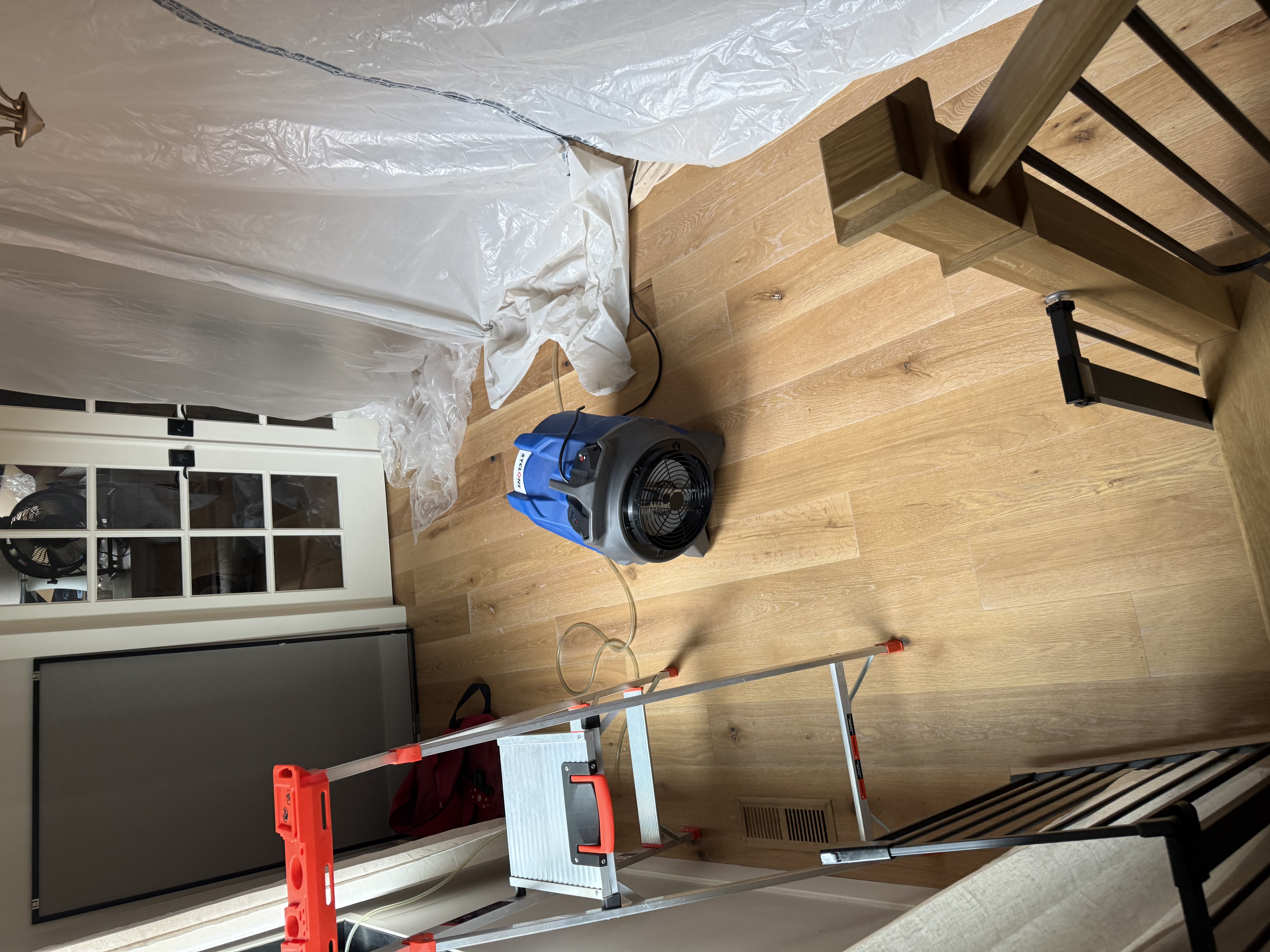
Professional structural drying uses high‑velocity air movers and industrial dehumidifiers placed according to readings. IICRC‑certified technicians from Scavello Restoration measure moisture inside drywall, studs, and subfloors with meters. They adjust fan and dehumidifier placement daily until readings fall back to normal. This method is especially important in older southeastern Pennsylvania homes that have plaster walls or dense framing. Industrial dehumidifiers used in professional restoration remove 30 to 80 pints of moisture per day, compared to roughly 20 to 30 pints for a standard residential unit, which can cut total drying time by 40 to 60 percent.
Some materials simply cannot dry in place. Soaked carpet padding, sagging drywall, and wet ceiling tiles usually need removal. Technicians may cut flood lines in walls to remove the lowest section of drywall and wet insulation. After demolition, they apply antimicrobial treatments to exposed framing to hold back any mold that began to grow.
According to the CDC, mold exposure can trigger asthma attacks, coughing, and other breathing problems. For families with children, seniors, or anyone with lung issues, careful mold prevention and, when needed, mold remediation from a trained company is more than a comfort; it is a health measure.
When to Call Scavello Restoration for Emergency Help
Calling Scavello Restoration for emergency help makes sense when damage goes beyond a small, simple spill. Large areas, sewage, or long‑standing water need trained hands and equipment.
Call right away if water covers more than a few square feet or reaches walls, ceilings, or cabinets. If you see sagging drywall, bulging paint, or water pouring through light fixtures, leave the area and get help. Sewage backups from drains or toilets in basements around Norristown or Plymouth Meeting are Category 3 events and always need professional cleanup. According to the Environmental Protection Agency, sewage and gray water can contain more than 120 types of viruses and harmful bacteria, making Category 3 events up to 10 times more hazardous than clean water spills.
Water that has been sitting for more than 24 hours is another red flag. At that point, even clean water from a supply line can start to carry bacteria and feed mold. A musty smell, visible spots on walls, or allergy flare‑ups are signs that mold may already be present. Real estate agents preparing listings in Montgomery County should never ignore these clues during pre‑sale walkthroughs.
Scavello Restoration offers 24/7 emergency response across southeastern Pennsylvania, with a 60‑minute on‑site goal. A live person answers the phone, even on weekends and holidays. With more than 30 years serving communities like Collegeville, Pottstown, Phoenixville, Paoli, and King of Prussia, their IICRC‑trained crews handle extraction, drying, mold remediation, sewage cleanup, contents care, and reconstruction.
They also work directly with all major insurance companies, handling documentation, photos, and billing so you are not stuck in the middle. One project manager guides you from the first emergency visit through the final walkthrough, which reduces stress at an already tense time.
Conclusion Act Fast, Stay Safe, and Let the Professionals Handle the Rest
Fast action and a clear plan keep water damage from taking over your home or rental. You stop the water at the main shut off valve, cut power to wet rooms, avoid household vacuums, document everything, and move quickly to prevent mold.
When the damage is more than you can safely manage, Scavello Restoration stands ready across southeastern Pennsylvania. Save their number with your other emergency contacts so that, if water strikes, you already know who to call in that first important hour.
Frequently Asked Questions
Question: Where is the main water shut off valve located in most southeastern Pennsylvania homes?
Answer: The main water shut off valve is usually near where the water line enters the home, often along the front basement wall. In some houses it sits in a utility closet, laundry room, near the water heater, or under the kitchen sink on slab homes. As a backup, many properties also have a curb‑side valve operated with a T‑shaped meter key.
Question: How quickly can mold start growing after water damage?
Answer: Mold can begin growing within 24 to 48 hours after materials get wet. Spores in the air settle on damp drywall, wood, or carpet padding and start colonies. Even when surfaces look dry, hidden moisture in walls and subfloors can feed mold, which is why fast drying and monitoring with moisture meters matters.
Question: Is water damage covered by homeowners insurance?
Answer: Sudden and accidental water damage, such as a burst pipe or broken water heater, is usually covered by standard homeowners insurance. Flooding from rivers or surface water normally needs separate flood insurance. Scavello Restoration helps by documenting the loss, working with your insurance adjuster, and offering direct billing to many carriers.
Question: What is the difference between Category 1, 2, and 3 water damage?
Answer: Category 1 is clean water from supply lines or rain that poses low health risk at first. Category 2 is gray water from appliances or toilet overflows without solids, which holds some contaminants. Category 3 is black water from sewage, storm drains, or long‑standing water, and it is highly hazardous, needing full protective gear and professional remediation.
Question: Can I stay in my home during water damage restoration?
Answer: You can sometimes stay, but it depends on water type and damage level. Clean water in one room with controlled drying may allow safe occupancy. Category 3 sewage events, heavy structural damage, or large mold problems often require temporary relocation. Scavello Restoration reviews safety on a case‑by‑case basis and explains your options clearly.